EN
EN

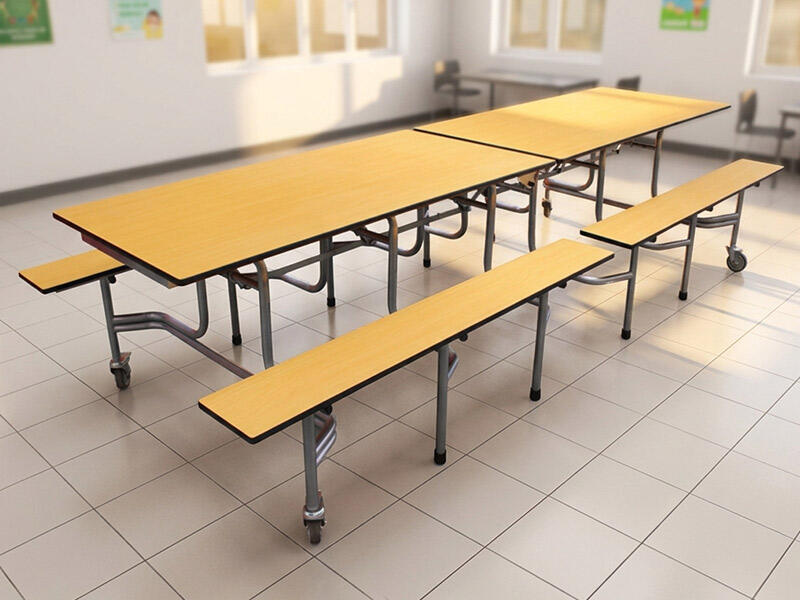
Recognizing When Fixed Furniture Limits Your School's Potential
Most schools inherit their furniture layout from decisions made years or decades ago, and the default assumption is that fixed tables belong in every cafeteria, classroom, and common area. This assumption carries hidden costs. A fixed table that serves lunch for ninety minutes each day occupies its floor footprint for the other twenty two and a half hours, blocking that space from hosting study groups, parent meetings, community events, or examination seating. A folding table, by contrast, transforms space from single purpose to multi purpose, enabling a cafeteria to become an examination hall, a classroom to become a workshop space, and a corridor to become a temporary exhibition area. The decision to invest in folding tables is fundamentally a decision about space utilization efficiency and the total number of functions a school building can support within its existing square footage. When procurement teams evaluate this investment, they should assess three triggers: the cost of unused space, the frequency of room reconfiguration events, and the physical storage infrastructure available for folded furniture.
Calculating the Real Cost of Unused Floor Space
School buildings represent one of the largest capital investments any educational institution makes, yet fixed furniture often forces large portions of that investment to sit idle. A standard school cafeteria with seating for 400 students occupies approximately 350 to 450 square meters. If that space sits empty outside of three daily meal periods totaling two hours, the facility operates at roughly eight percent utilization for its primary dining function. Installing a folding table system that collapses to roughly 20 centimeters in depth and stores against a wall can recover 60 to 70 percent of that floor area during non meal hours, converting dead space into usable multipurpose area. The financial math is straightforward: the annualized cost per square meter of school building space multiplied by the square meters recovered through folding furniture deployment equals the annual value of recovered capacity. For a mid sized school paying ongoing maintenance, utilities, and depreciation on its facilities, recovered space that enables new programming such as after school tutoring, community language classes, or rental event hosting can offset the upfront premium of folding tables within two to three years of installation.
Evaluating Reconfiguration Frequency and Labor Costs
Some schools reconfigure rooms rarely, perhaps once per semester for examinations, and the labor cost of moving heavy fixed tables is absorbed without much complaint. Other schools reconfigure spaces weekly or even daily, with teachers and custodial staff spending hundreds of collective hours per year moving furniture. A folding table equipped with 360 degree swivel silent casters and integrated brakes reduces the labor required for room reconfiguration from a multi person task to a single person activity. Tables with telescoping panel mechanisms can expand from four to twelve seats within seconds and collapse to a depth of approximately 20 centimeters for wall storage, eliminating the need to carry heavy tabletop sections across hallways. When school administrators calculate the staff hours currently spent on room setups and teardowns for assemblies, examinations, parent teacher conferences, and community events, the labor savings from a folding table deployment often justify the investment independently of the space utilization benefits. The silent caster design also addresses a common complaint in multi story school buildings where furniture movement noise from upper floors disrupts classes below.
Material Durability for High Traffic Multi Purpose Use
A multipurpose folding table must withstand different types of use than a dedicated dining table or classroom desk. Cafeteria service exposes table surfaces to food acids, hot liquids, and aggressive cleaning chemicals. Classroom use demands a smooth writing surface. Event hosting introduces unpredictable loads from heavy equipment, decorations, and concentrated weight points. This variety of stress profiles demands material specifications that exceed single purpose furniture requirements. A steel tube frame with a wall thickness of 1.8 to 2.0 millimeters provides the structural backbone, capable of supporting static loads exceeding 200 kilograms across the expanded table surface. Aluminum alloy or stainless steel frame options add corrosion resistance for schools in humid climates or those using industrial cleaning protocols. The tabletop itself benefits from fireproof board options that meet safety codes for public assembly spaces, while standard wood and metal composite surfaces provide adequate durability for general educational use. Electrostatic powder coating on metal components and electroplated anti rust treatment ensure that folding mechanisms operate smoothly year after year without corrosion binding the hinge points.
Storage Infrastructure and Deployment Planning
A folding table investment only delivers its promised value if the school has planned the storage dimension carefully. Tables that fold to approximately 20 centimeters in depth can be stored flat against walls, in dedicated storage alcoves, or wheeled into storage rooms on their own casters. However, the storage location must be proximate to the deployment area. A folding table stored in a basement storage room three floors below the cafeteria will not deliver the rapid reconfiguration that justifies its higher unit cost compared to a fixed table. Best practice deployment planning places folded table storage within the same room or an immediately adjacent storage area, with clear floor paths free of steps or narrow doorways that would impede caster movement. Vertical storage racks can multiply storage capacity for schools managing large table fleets across multiple rooms, keeping folded tables organized by size and seating capacity for rapid deployment to different event configurations.
Practical Application Scenario a School's Journey to Multi Purpose Space
Consider a secondary school in a growing suburban district that operates a cafeteria serving 600 students in three lunch shifts. The cafeteria occupies approximately 500 square meters and contains fixed bench tables bolted to the floor. The school administration identifies three unmet needs: a large examination hall seating 300 students for end of term testing, a community event space for weekend rental income, and flexible group work areas for project based learning initiatives. The fixed tables block all three uses. After evaluating alternatives, the school invests in folding tables with telescoping panel mechanisms offering four to twelve seat configurations, all equipped with silent casters and integrated brakes. The tables are deployed for the three lunch periods totaling two hours per day and folded against wall storage racks for the remaining twenty two hours. During examination weeks, half the tables are deployed in examination row configuration rather than dining clusters. On weekends, the space is reconfigured for community rental events. Within eighteen months, rental income and staff labor savings during examinations and parent evenings recovered the premium paid for folding tables over equivalent fixed furniture. The key success factor was not the folding mechanism itself but the disciplined operational planning that matched furniture deployment to a clear schedule of multi purpose use cases.
Table of Contents
- Recognizing When Fixed Furniture Limits Your School's Potential
- Calculating the Real Cost of Unused Floor Space
- Evaluating Reconfiguration Frequency and Labor Costs
- Material Durability for High Traffic Multi Purpose Use
- Storage Infrastructure and Deployment Planning
- Practical Application Scenario a School's Journey to Multi Purpose Space