EN
EN

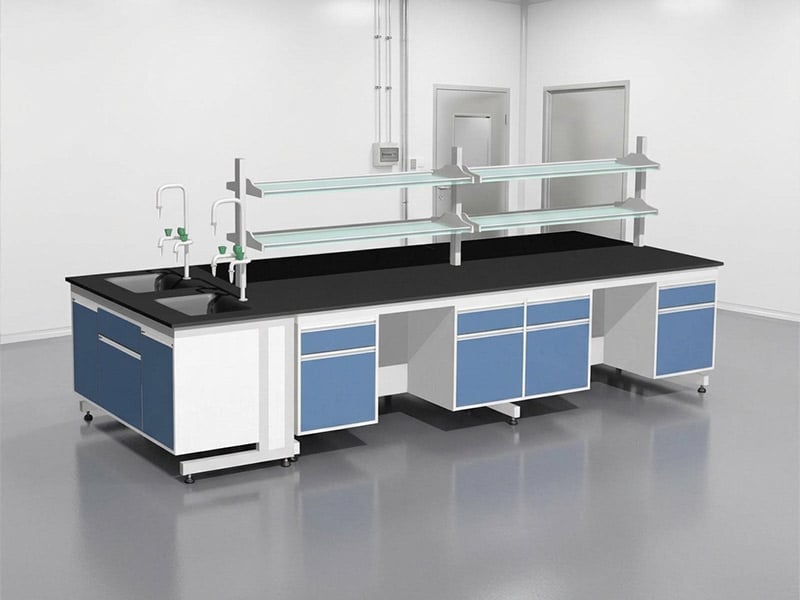
What Happens When Standard Furniture Enters a Chemistry Lab
A wooden desk that serves perfectly well in a literature classroom becomes a safety hazard the moment it is placed in a school chemistry laboratory. Within weeks, spilled hydrochloric acid etches the surface. Within months, organic solvents dissolve the finish. Within a year, the structural integrity of the work surface is compromised, creating crevices where reactive residues accumulate and where future experiments risk unpredictable chemical interactions. This is why school lab furniture is a distinct product category from general educational furniture, governed by material specifications that prioritize chemical inertness, thermal stability, and contaminant resistance above all other performance characteristics. Procurement officers who treat laboratory furniture as interchangeable with classroom furniture expose their institutions to accelerated replacement costs, laboratory downtime, and most importantly, student safety risks that no budget savings can justify.
The Chemistry of Surface Materials What Makes a Lab Workbench Resistant
School lab furniture surfaces must resist a broad spectrum of chemical agents that students encounter across biology, chemistry, and physics curricula. The industry benchmark for educational laboratory worktops is the physico chemical board, a composite material engineered specifically for chemical resistance. A solid physico chemical board of 12.7 millimeter thickness features a dual sided protective membrane that prevents liquid absorption from either the working surface or the underside where spills may drip. This material resists degradation from common laboratory reagents including dilute sulfuric acid, sodium hydroxide solution, ethanol, acetone, and hydrogen peroxide at concentrations typical of secondary school experiments. The board also provides anti static properties, which is relevant for physics laboratories where electrostatic discharge could damage sensitive measurement equipment or interfere with electronics projects. Heat resistance is another critical parameter. A quality lab furniture surface should withstand direct contact with objects at temperatures up to 1300 degrees Celsius without surface deformation or chemical breakdown, protecting against accidents involving hot beakers, crucibles, or Bunsen burner proximity.
Frame Construction and the Acid Pickling Phosphating Process
While the work surface handles direct chemical exposure, the frame of school lab furniture faces a different challenge: ambient chemical vapor corrosion and occasional splash contact. Cold rolled steel frames that would perform adequately in dry classroom environments degrade rapidly in laboratory conditions where acid fumes and high humidity combine to accelerate oxidation. The manufacturing countermeasure is a multi stage metal treatment process. Acid pickling removes mill scale, welding oxides, and surface contaminants from the raw steel, creating a chemically clean substrate. Phosphating then deposits a crystalline phosphate layer that serves two functions: it provides immediate corrosion inhibition and it creates a micro rough surface profile that anchors the subsequent coating with mechanical and chemical bonding. Epoxy resin powder applied through electrostatic spraying flows into the phosphate crystal structure during heat curing, forming an impermeable barrier that resists acid vapor penetration. For laboratory environments with particularly aggressive chemical inventories, such as schools offering advanced placement chemistry or vocational science programs, aluminum alloy or stainless steel frame construction eliminates ferrous corrosion risk entirely, though at a higher material cost.
Safety Standards and Compliance Documentation for Lab Furniture
Educational laboratory furniture is subject to a regulatory framework that goes beyond general classroom furniture standards. While BIFMA and EN standards cover structural integrity and ergonomics for all educational seating and workstations, laboratory furniture procurement should additionally verify compliance with relevant chemical safety and fire resistance codes applicable in the target market. Formaldehyde emission from engineered wood or composite components is a specific concern because laboratory environments often have controlled ventilation that can concentrate airborne emissions if furniture materials off gas. The established safe threshold of less than 0.1 milligrams per cubic meter of formaldehyde emission applies strictly to lab furniture, and procurement specifications should require third party test documentation rather than relying on manufacturer self declarations. ISO 9001 certification at the manufacturing facility provides process consistency assurance, meaning that the chemical resistance properties verified on test samples will be replicated across production batches rather than degrading as production scales. ISO 14001 environmental management certification additionally confirms that the chemical treatment processes used in manufacturing, including acid pickling and phosphating, are managed within environmental compliance frameworks.
Laboratory Specific Features That Support Chemical Safety
Beyond the primary work surface and frame, several secondary features of school lab furniture contribute to chemical safety in ways that are easy to overlook during procurement. Rounded edges on all tabletop corners and frame members serve a dual purpose: impact injury prevention for students moving between workstations and elimination of sharp corners where spilled chemicals can pool and concentrate. Floor mounted installation options for laboratory workbenches provide absolute stability during experiments involving glassware and reactive mixtures, where a bumped or shifted table could trigger a spill cascade across multiple student stations. Integrated storage cabinets built into the lab furniture frame keep frequently used reagents at the workstation rather than requiring students to carry glass containers across the laboratory floor, reducing transport spill risk. For biology laboratories where electrical outlets are needed for microscopes and incubators, some lab tables include integrated USB adapters and power access points that are positioned above the chemical exposure zone rather than at floor level where spills accumulate.
Practical Sourcing Scenario Evaluating Chemical Resistance Claims
A secondary school science department in a tropical climate is specifying lab furniture for a new chemistry laboratory serving 30 students per class. The procurement committee receives proposals from three suppliers, each claiming their furniture is chemically resistant. The critical question is how to verify these claims objectively rather than accepting marketing language at face value. The effective evaluation approach requests each supplier to provide documented test results for the specific chemicals used in the school's chemistry curriculum, including exposure duration, concentration, and observed surface condition after testing. One supplier provides a detailed test matrix covering twelve reagents with photographic evidence of surface condition after 24 hour exposure at curriculum standard concentrations. A second supplier provides only a general chemical resistance statement without specific test data. A third supplier references the 12.7 millimeter physico chemical board specification but cannot provide batch specific test reports. The procurement committee selects the first supplier, establishing a precedent that chemical resistance claims in school lab furniture procurement must be supported by verifiable test documentation rather than general assertions. The specification also requires floor mounted installation for all workstations in the wet chemistry zone and specifies aluminum alloy frames for benches positioned near the fume hood where acid vapor concentration is highest.
Table of Contents
- What Happens When Standard Furniture Enters a Chemistry Lab
- The Chemistry of Surface Materials What Makes a Lab Workbench Resistant
- Frame Construction and the Acid Pickling Phosphating Process
- Safety Standards and Compliance Documentation for Lab Furniture
- Laboratory Specific Features That Support Chemical Safety
- Practical Sourcing Scenario Evaluating Chemical Resistance Claims