EN
EN

Why Material Selection Matters for School Table Durability and Safety
In my experience working with educational furniture projects, one of the most common issues schools face is premature wear and tear of classroom furniture. Choosing the right material for a school table is not just about cost—it directly impacts durability, safety, maintenance, and long-term value. A well-constructed school table must withstand daily use, frequent cleaning, and even occasional misuse by students. Manufacturers like Zoifun emphasize structural integrity and child safety, ensuring that every school table meets strict performance standards.
From a professional standpoint, material selection determines resistance to scratches, moisture, chemicals, and impact. According to industry insights from educational furniture associations, high-quality materials can extend the lifespan of a school table by 30%–50%, significantly reducing replacement costs for schools.
High-Pressure Laminate (HPL): The Most Popular Choice for School Table Surfaces
High-Pressure Laminate (HPL) is widely regarded as one of the best materials for school table surfaces. In several classroom installations I’ve reviewed, HPL consistently outperformed other materials in terms of scratch resistance and ease of cleaning.
HPL is created by compressing layers of kraft paper with resin under high pressure. This process produces a dense, durable surface that is resistant to stains, heat, and moisture—making it ideal for a school table used in science labs, art rooms, and general classrooms. Zoifun’s school table designs often incorporate HPL surfaces due to their long-lasting performance and low maintenance requirements.
Additionally, HPL offers a wide range of colors and finishes, allowing schools to create engaging learning environments without sacrificing functionality.
MDF with Melamine Finish: Cost-Effective and Versatile
Medium Density Fiberboard (MDF) combined with a melamine finish is another common material used in school table construction. Based on practical applications, this combination is particularly suitable for budget-conscious schools that still require decent durability.
Melamine-coated MDF provides a smooth, attractive surface that is resistant to minor scratches and stains. While it may not be as robust as HPL, it performs well in standard classroom settings where heavy-duty use is limited. A well-manufactured school table using MDF can last for years if properly maintained.
From a manufacturing perspective, MDF allows for precise shaping and customization, making it easier to produce ergonomic designs tailored to different student age groups—something companies like Zoifun integrate into their product lines.
Solid Wood: Natural Strength and Premium Aesthetic
Solid wood is often chosen for its strength, longevity, and natural appearance. In higher-end educational environments, such as private schools or libraries, a solid wood school table provides both durability and aesthetic value.
From experience, hardwoods like oak and beech are particularly effective due to their resistance to impact and wear. However, solid wood requires proper sealing and maintenance to prevent damage from moisture and temperature changes.
While more expensive, a solid wood school table can last decades, making it a long-term investment. It also aligns with sustainability goals when sourced responsibly, which is increasingly important in modern educational procurement policies.
Steel Frames: Structural Stability and Long-Term Reliability
While tabletop materials are crucial, the frame of a school table is equally important. Steel is the most widely used material for table frames due to its strength and stability.
In real-world classroom environments, I’ve observed that powder-coated steel frames significantly enhance the lifespan of a school table by preventing rust and corrosion. This is especially important in humid climates or areas where tables are frequently cleaned with water.
Zoifun integrates reinforced steel frames into many of its school table designs, ensuring that the furniture remains stable even under heavy daily use. Adjustable steel legs are also a popular feature, allowing the school table to accommodate students of different heights.
Plastic and Polypropylene: Lightweight and Student-Friendly
Plastic materials, particularly polypropylene, are commonly used in modern school table designs, especially for younger students. These materials are lightweight, easy to move, and resistant to moisture.
From a usability perspective, a plastic-based school table is ideal for flexible learning environments where furniture needs to be rearranged frequently. It also reduces the risk of injury due to its smooth edges and lighter weight.
However, plastic tables may not offer the same level of durability as HPL or solid wood, so they are best suited for kindergartens or temporary setups rather than heavy-duty classroom use.
Combining Materials: The Best Approach for Modern School Table Design
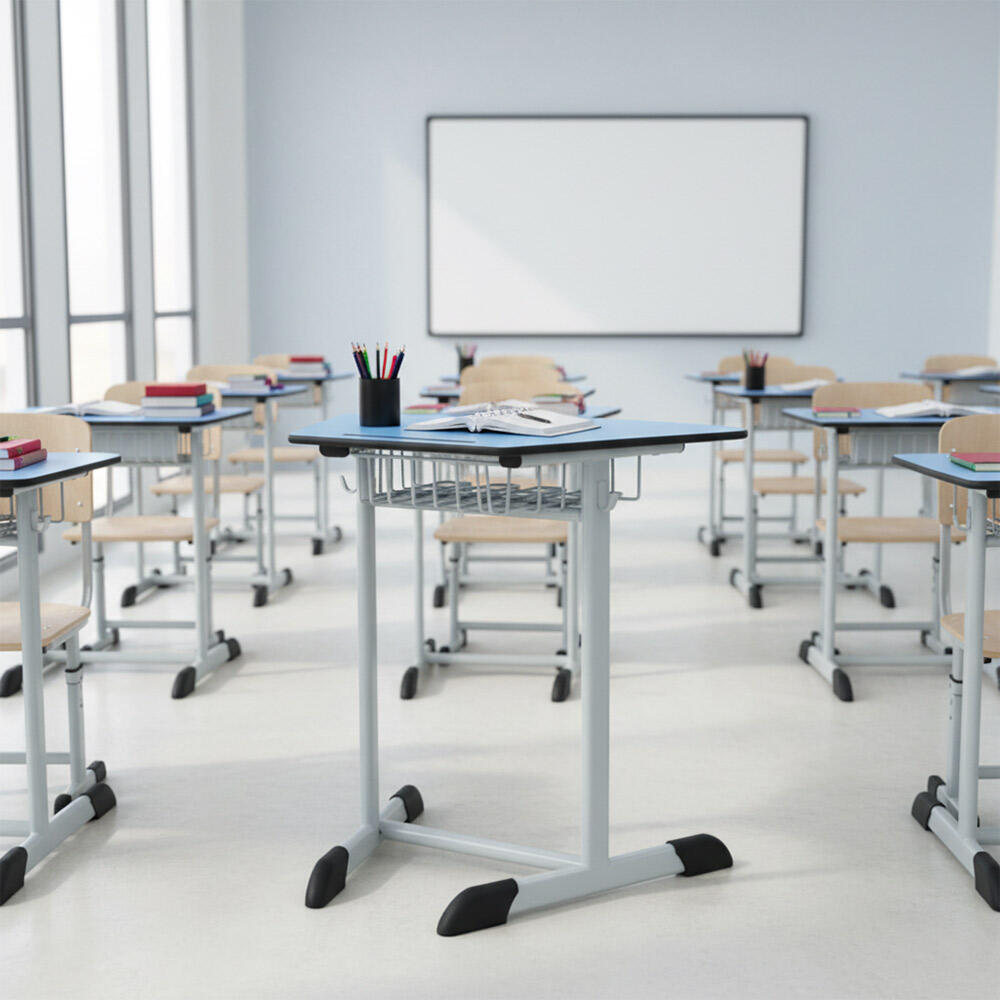
In today’s market, the most effective school table designs combine multiple materials to maximize performance. For example, an HPL tabletop paired with a steel frame offers both durability and structural strength.
Based on industry best practices, this hybrid approach allows manufacturers like Zoifun to balance cost, durability, and aesthetics. A well-designed school table often includes:
-
HPL or melamine surface for durability
-
MDF or plywood core for structure
-
Steel frame for stability
This combination ensures that the school table can meet the diverse needs of modern educational environments, from traditional classrooms to collaborative learning spaces.
Conclusion: Choosing the Right Material for Long-Term Value
Selecting the right material for a school table is a strategic decision that affects both functionality and cost efficiency. From my experience and industry insights, HPL and steel combinations offer the best balance of durability and value, while MDF and plastic provide cost-effective alternatives for specific use cases.
Ultimately, schools should evaluate their specific needs—such as student age, usage intensity, and budget—before choosing a school table. By partnering with experienced manufacturers like Zoifun, institutions can ensure they invest in furniture that is safe, durable, and designed for long-term use.
Table of Contents
- Why Material Selection Matters for School Table Durability and Safety
- High-Pressure Laminate (HPL): The Most Popular Choice for School Table Surfaces
- MDF with Melamine Finish: Cost-Effective and Versatile
- Solid Wood: Natural Strength and Premium Aesthetic
- Steel Frames: Structural Stability and Long-Term Reliability
- Plastic and Polypropylene: Lightweight and Student-Friendly
- Combining Materials: The Best Approach for Modern School Table Design
- Conclusion: Choosing the Right Material for Long-Term Value