EN
EN

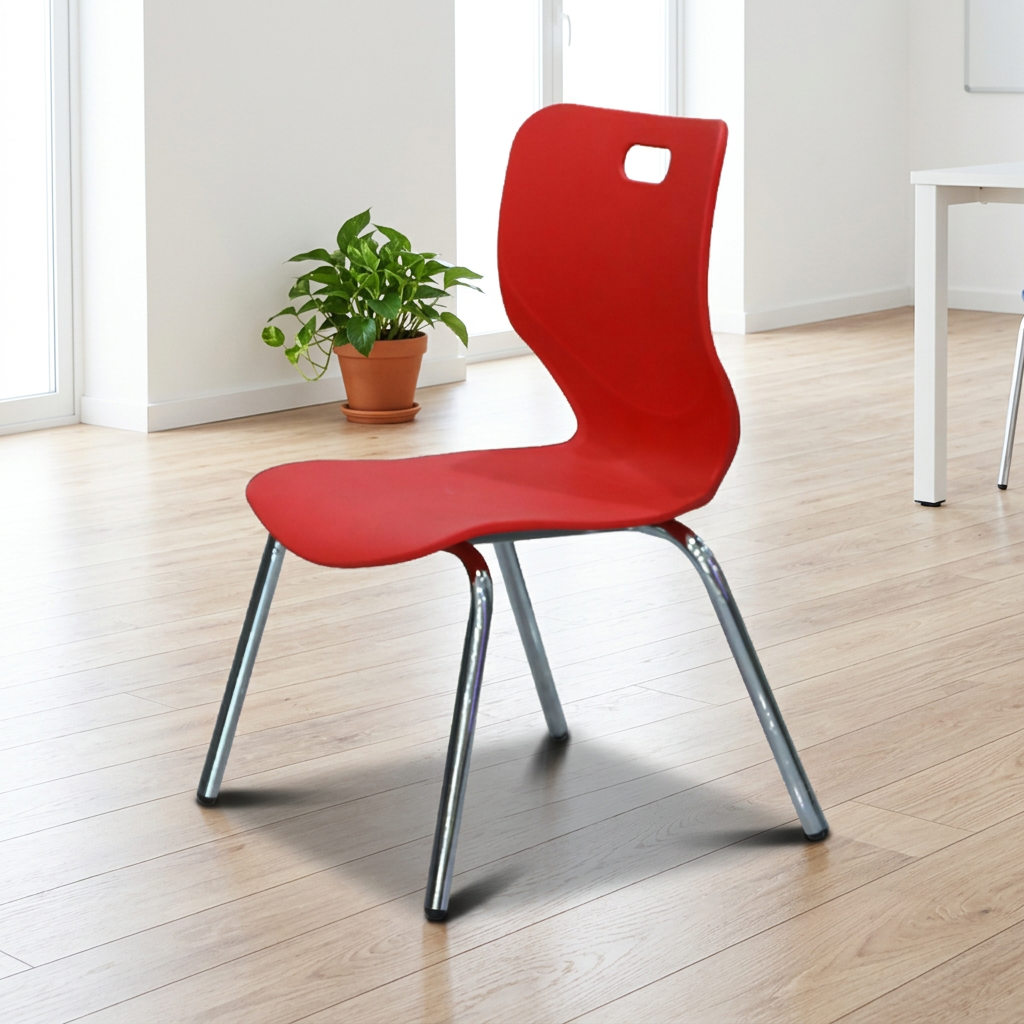
Every parent, teacher, and school administrator understands how critical classroom furniture is for student health and academic performance. Among all classroom furnishings, school chairs stand out as the most essential daily tool for learners of all ages. Students spend six to eight hours sitting on school chairs every school day, making the ergonomic sizing of school chairs a key factor in preventing chronic back pain, poor posture, and reduced learning efficiency. Many educational institutions still use one-size-fits-all furniture, which fails to match the diverse physical development of growing children. This article will break down the universal standard sizes for ergonomic school chairs, explain how size classification works, and guide you to select the most suitable school chairs for different student age groups.
Before diving into specific size standards, it is vital to understand why standardized ergonomic sizes matter for school chairs. Unlike ordinary household chairs, school chairs are professionally designed to fit students’ unique body proportions, support proper sitting posture, and adapt to long-duration classroom use. Ill-fitted school chairs cause a series of physical problems: overly high seat heights force students to dangle their feet, disrupting blood circulation; low seat heights bend the spine forward and increase lumbar pressure; mismatched backrest heights fail to support the upper back and neck. Over time, these issues lead to spinal curvature, myopia, muscle fatigue, and decreased concentration in class. Therefore, complying with official ergonomic size standards is the foundation of designing and purchasing qualified school chairs.
Globally, two authoritative standard systems dominate the size specifications of ergonomic school chairs: the European EN 1729 standard, widely adopted across most Western countries, and the GB/T 3976 national standard in China, which is tailored to the physical characteristics of Asian students. Both systems classify school chairs into graded sizes based on student height, ensuring precise matching between furniture and human body dimensions. These standards focus on three core measurement indicators for school chairs: seat height, seat depth, and backrest height, which together determine the overall ergonomic effect of school chairs.
The European EN 1729 standard is the most internationally recognized guideline for educational furniture, defining eight standard sizes (Size 0 to Size 7) for ergonomic school chairs covering students from preschool to university age. Each size corresponds to a specific student height range and fixed furniture dimensions. Size 0 school chairs are designed for toddlers and preschool students with a height of 80cm to 100cm, featuring a seat height of 26cm, a seat depth of 24cm, and a backrest height of 22cm, fully adapting to the short stature and small body size of young children. Size 1 to Size 3 school chairs target primary school students aged 6 to 12. Size 1 school chairs suit students 100cm to 115cm tall with a 30cm seat height; Size 2 fits 115cm to 130cm students with a 34cm seat height; Size 3 matches 130cm to 145cm students with a 38cm seat height. These three sizes are the most commonly used school chairs in primary school classrooms worldwide.
For secondary school and college students, Size 4 to Size 7 school chairs under the EN 1729 standard are the mainstream choices. Size 4 school chairs are suitable for students 145cm to 160cm tall with a 42cm seat height, ideal for junior high school learners. Size 5 and Size 6 school chairs fit senior high school students aged 15 to 18, with seat heights of 46cm and 50cm respectively, catering to the rapid physical growth of teenagers. Size 7 school chairs with a 54cm seat height are customized for college students and adult learners with a height above 180cm, providing sufficient leg space and spinal support for tall users. Each size of these school chairs is also equipped with color-coded marks for easy classroom classification and management by teachers.
Complementary to European standards, China’s GB/T 3976-2014 standard formulates 11 graded sizes (No.0 to No.10) for ergonomicschool chairs, which are more refined and better suited to the growth characteristics of Chinese students. This standard strictly calibrates core parameters of school chairs based on age and height grouping. The smallest No.10 school chairs have a seat height of 27cm, suitable for students under 120cm tall, while the largest No.0 school chairs have a seat height of 46cm for students over 180cm tall. In addition to seat height, the standard clearly defines the upper edge height of the chair back for each model of school chairs, ranging from 230mm to 350mm, ensuring targeted support for the lumbar and thoracic spine of students at different growth stages. This refined sizing system solves the problem of mismatched furniture for students with large height differences in the same grade, making campusschool chairs more ergonomic and inclusive.
To ensure the ergonomic effect of school chairs, three key fitting principles must be followed when selecting standard sizes, regardless of regional standards. First, the seat height of school chairs should keep the student’s feet flat on the ground, with the knees bent at a 90-degree angle, which ensures unobstructed leg movement and normal blood circulation. Second, the seat depth of qualified school chairs should leave a 3 to 5cm gap between the front edge of the seat and the back of the student’s knee, avoiding compression on the popliteal fossa that causes numbness and fatigue. Third, the backrest of standard school chairs must perfectly fit the student’s lumbar curve, with the upper backrest supporting the shoulder blades to prevent hunchback and slouching postures.
Many modern educational environments now adopt height-adjustable ergonomic school chairs as a flexible alternative to fixed-size models. Adjustable school chairs can freely switch between multiple standard sizes through lifting structures, adapting to the annual height growth of students and avoiding frequent furniture replacement. However, adjustable school chairs still need to comply with the dimensional range of national and international standards to ensure safety and ergonomics. Randomly modified oversized or undersized school chairs will still fail to protect students’ physical health and violate classroom furniture safety specifications.
In conclusion, standardized ergonomic sizes are the core guarantee for high-quality school chairs. Whether adopting the eight-size EN 1729 European standard or the eleven-size GB/T 3976 Chinese standard, the core goal is to design school chairs that fit students’ physical development laws. Schools and parents should abandon the traditional view that all school chairs are identical and prioritize size matching and ergonomic performance when purchasing school chairs. Suitable standard-size school chairs can not only protect students’ spinal health and correct sitting postures but also effectively improve learning focus and classroom efficiency, bringing long-term benefits to students’ physical and mental growth.