EN
EN


How activity tables support preschool interactive learning
Time : 2026-09-14
How activity tables support preschool interactive learning
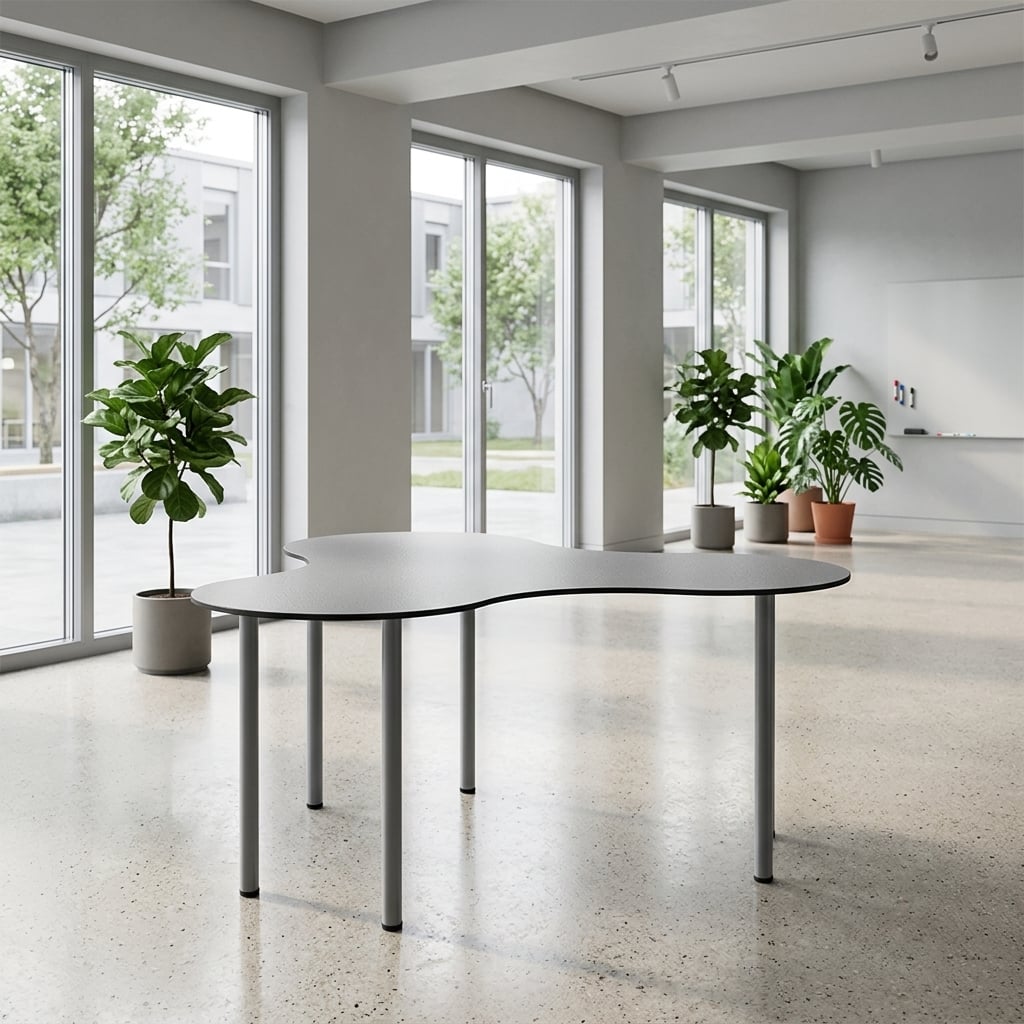
Preschool education focuses entirely on hands-on exploration, peer communication, and situational interactive growth, rather than rigid knowledge indoctrination, and activity tables are the most critical carrier to support this interactive teaching mode. In every preschool classroom, playroom, and early education activity space, activity tables serve as the core interactive platform that carries children’s daily games, manual creation, group communication, and cognitive learning. Professional preschool activity tables are not simple placement furniture; they are specially designed to adapt to preschoolers’ physical characteristics, active behavioral habits, and interactive learning needs. Every structural detail and functional design of activity tables revolves around four core advantages: safety guarantee, collaborative learning support, interactive growth empowerment, and adaptive height adjustment. High-quality activity tables can completely activate children’s learning initiative, break the one-way teaching limitation, and build a vivid, safe, and efficient interactive learning atmosphere for preschool education. This article will comprehensively elaborate on how professional activity tables support high-quality preschool interactive learning from multiple dimensions, highlighting the irreplaceable educational value of activity tables in early childhood growth.
Safety is the primary design principle of all preschool activity tables, and it is also the basic premise for activity tables to stably support interactive learning. Preschool children aged 3 to 6 are in a stage of active movement, curious exploration, and poor self-protection awareness. They often crawl, lean, chase, and operate various toys and teaching aids around activity tables during interactive activities. Ordinary simple tables have sharp edges, unstable structures, and unqualified materials, which are prone to collision injuries, scratches, and environmental pollution, seriously hindering the development of interactive activities. In contrast, standard preschool activity tables adopt full-round corner polishing technology for the entire table body, completely eliminating sharp burrs and right-angle edges. Every contact part of activity tables is smooth and rounded, which can effectively avoid accidental injuries when children collide or bump into activity tables during lively interactive games.
In terms of material safety, formaldehyde-free, environmentally friendly, non-toxic high-quality raw materials are standard for qualified activity tables. The eco-friendly boards and food-grade plastic materials of activity tables will not release harmful substances, ensuring that children can touch, lean on, and even create freely on activity tables for a long time without health risks. In addition, the reinforced stable bracket structure and non-slip silent foot pads of activity tables prevent sliding and shaking during children’s active operations. Even if multiple children push or lean on activity tables at the same time during group interaction, activity tables can remain stable without tilting or loosening. The all-round safety optimization of activity tables eliminates all hidden dangers in interactive scenarios, allowing preschool teachers and children to carry out various interactive learning activities on activity tables with absolute peace of mind.
Supporting collaborative learning is the core educational function of activity tables, and activity tables are the best spatial carrier for preschoolers to cultivate team awareness and communication skills. Preschool interactive learning emphasizes peer cooperation and mutual inspiration, and scattered independent learning modes cannot realize effective interactive growth. Professional activity tables adopt multi-person shared desktop design with spacious and flat operation space, which can accommodate 4 to 6 preschool children to gather around activity tables at the same time to complete group tasks. Whether it is handmade paper cutting, puzzle assembly, color painting creation, or role-playing games, activity tables can provide a unified interactive platform for children.
When children carry out collaborative learning on activity tables, they need to share desktop space, discuss task ideas, distribute operation steps, and help each other solve difficulties. This interactive process on activity tables naturally cultivates children’s team cooperation ability, language expression ability, and mutual tolerance awareness. Different from single-person desks that isolate children’s communication, open and shared activity tables break individual learning barriers, encourage active communication and idea collision among young children, and turn passive teacher guidance into active peer interaction. Many preschool interactive courses such as group art creation, scientific exploration experiments, and early education cognitive games rely entirely on the open collaborative attributes of activity tables. The reasonable layout of activity tables can divide the classroom into multiple independent interactive groups, allowing multiple teams to carry out learning activities simultaneously on different activity tables, greatly improving the richness and efficiency of preschool interactive teaching.
Empowering children’s all-round interactive growth is the core value of activity tables in preschool education. Every interactive behavior occurring on activity tables can effectively exercise preschoolers’ comprehensive abilities and promote physical and mental synchronous growth. In daily interactive learning scenarios, children complete painting, sticking, assembling, and sorting operations on activity tables, which effectively exercise their finger flexibility, hand-eye coordination, and fine motor skills. The diverse and expandable desktop functions of activity tables support multi-dimensional interactive games, including color recognition, shape matching, digital cognition, and creative graffiti, subtly cultivating children’s cognitive ability, imagination, and innovative thinking.
Moreover, activity tables build a bridge of emotional interaction between teachers and children. Teachers can sit side by side with children around activity tables to guide interactive learning, observe each child’s operation status and performance on activity tables in real time, accurately grasp their learning characteristics and personality preferences, and conduct targeted encouragement and guidance. This equal and close interactive mode centered on activity tables shortens the distance between teachers and children, creates a warm and positive interactive learning atmosphere, and helps cultivate children’s bold expression and confident personality. In group interactive activities on activity tables, children will take the initiative to share their works and ideas, learn to appreciate others’ advantages, and gradually form good social skills and positive interactive awareness, laying a solid foundation for future collective life and social communication.
The height adaptive design of activity tables solves the pain point of mismatched furniture in preschool growth and realizes long-term accompanying interactive learning for children. Preschoolers grow rapidly in height and body shape, and fixed-height ordinary tables cannot adapt to children’s physical changes. Too-high tables will cause children to shrug their shoulders and tilt their heads when operating, leading to poor sitting posture and visual fatigue; too-low tables will make children hunch over for a long time, affecting spinal development. Modern professional preschool activity tables are equipped with flexible height adjustment functions, which can freely adjust the height of activity tables according to children’s age, height, and different activity scenarios.
For young preschoolers aged 3 to 4 with shorter stature, teachers can lower the height of activity tables to ensure that children’s feet can touch the ground stably and their arms can be placed flat on activity tables, maintaining a relaxed and comfortable operating posture. For older preschoolers aged 5 to 6 with taller height, raising the height of activity tables can adapt to their physical development, effectively preventing hunchback and myopia problems caused by inappropriate table height. The adjustable activity tables can perfectly accompany children’s entire preschool growth cycle, always providing the most scientific and comfortable interactive learning platform. Whether it is sitting creation, standing operation, or group discussion, the height-matched activity tables can ensure that every child participates in interactive activities in a healthy posture, realizing the integration of interactive learning and physical health protection.
In addition to the four core advantages, the humanized and versatile design of activity tables further enriches the forms of preschool interactive learning. Most preschool activity tables adopt multi-functional integrated design, with smooth graffiti desktops, reserved storage grooves, and splicable combined structures. The flexible desktop of activity tables can support painting, writing, puzzle playing, and manual production at the same time, meeting the diversified interactive teaching needs of preschool courses. The built-in storage space of activity tables can store crayons, building blocks, handmade materials, and picture books, allowing children to learn to organize their own learning supplies after interactive activities on activity tables, cultivating good habits of tidiness and independence.
The lightweight and movable design of activity tables also supports flexible classroom layout adjustment. Teachers can freely move and splice activity tables according to different interactive teaching themes, changing from conventional small-group interaction to large-team collective creation, making preschool interactive learning more flexible and diverse. The durable and easy-to-clean surface of activity tables can resist daily graffiti, water stains, and wear, ensuring that activity tables can maintain a clean and tidy interactive environment after long-term high-frequency use by children, reducing the maintenance burden of preschool teachers.
To sum up, activity tables are indispensable core educational facilities in modern preschool interactive teaching systems. The safe structural design of activity tables guards the whole-process safety of children’s interactive activities, the open shared space of activity tables supports efficient collaborative learning among peers, the multi-scenario interactive attributes of activity tables promote children’s comprehensive ability and personality growth, and the height adaptive function of activity tables realizes scientific accompaniment for children’s physical development. Every detail optimization of activity tables is centered on preschool children’s interactive learning needs and growth characteristics.
Excellent activity tables are no longer a simple learning platform, but an important educational tool that integrates safety protection, collaborative training, interactive growth, and adaptive accompaniment. For modern preschool education that advocates interactive experience and growth-oriented teaching, equipping high-quality professional activity tables is the key to optimizing classroom teaching effects, stimulating children’s learning initiative, and promoting healthy and all-round growth of young children. With the continuous upgrading of preschool educational concepts, activity tables will continue to give play to their unique educational value and become an indispensable core carrier for high-quality preschool interactive learning.