EN
EN


Electrifying the Venue! New Industry Trends—Insights from the Exhibition Floor
The 10th Indonesia DEFU Expo opened with great fanfare at the Jakarta International Expo (JIE) in Indonesia. A central highlight of the event was the Campus Furniture Exhibition Zone, located in Hall C3N208. Guided by the core principles of "Intelligence, Green Design, and Human-centricity," this zone brought together numerous domestic and international industry elites and showcased cutting-edge innovations. It established a premier platform for exchange, procurement, and innovation across the entire campus furniture value chain, injecting fresh momentum into the upgrading of educational spaces. In doing so, it successfully fulfilled its critical mission of industry showcasing, resource matchmaking, and trendsetting.
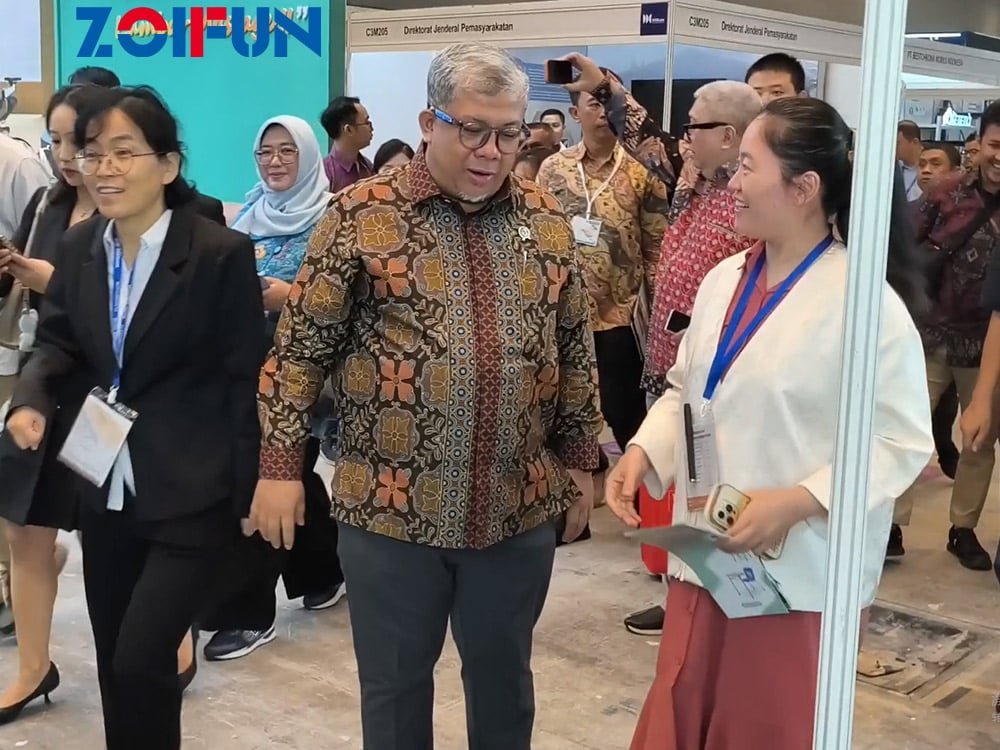
Leveraging the core positioning of the Indonesia Building & Decoration Expo—characterized by "Design Leadership, Dual-Cycle Integration, and Whole-Chain Collaboration"—the Campus Furniture Exhibition Zone focused on the deepening of the "New Education Infrastructure" strategy and the practical implementation of "Dual Carbon" goals. It comprehensively demonstrated the profound transformation of campus furniture, shifting from mere "functional adaptation" to "ecological empowerment." Notably, the exhibition zone attracted a host of industry leaders and specialized brands—such as ZOIFUN—to compete on a shared stage. The exhibits spanned a full spectrum of categories, including classroom desks and chairs, dormitory furniture, library furnishings, and campus office furniture. Beyond presenting the latest product technologies and design achievements, the event unveiled holistic, scenario-specific solutions tailored for kindergartens, primary and secondary schools, and higher education institutions, thereby underscoring the vibrant vitality and immense growth potential of the campus furniture industry.
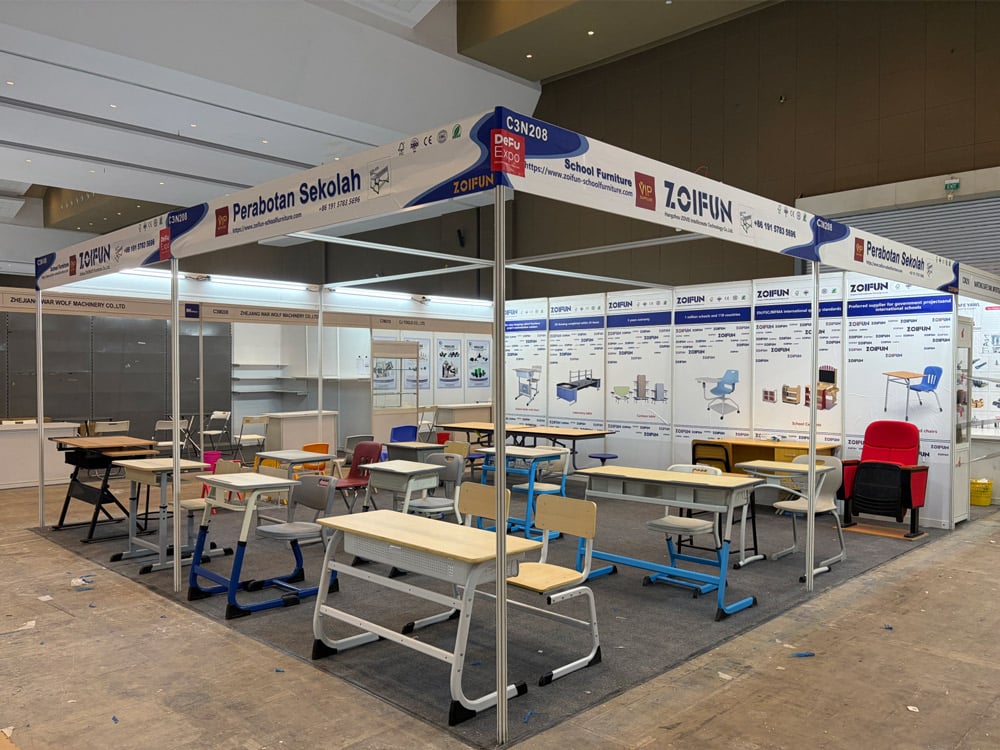
Intelligent upgrading emerged as the most compelling highlight of the exhibition, with a concentrated display of smart campus furniture solutions that effectively redefined the boundaries of the campus furniture experience. On-site demonstrations featured smart height-adjustable desks and chairs capable of responding to voice commands or mobile app controls; these units can memorize individual students' height preferences and, when paired with posture-monitoring sensors, provide real-time alerts regarding poor sitting habits. This functionality serves to effectively prevent myopia and spinal curvature, thereby aligning perfectly with the health and developmental needs of adolescents. Furthermore, dormitory furniture embedded with IoT modules can seamlessly integrate with campus management platforms to facilitate granular asset management and proactive fault prediction, significantly boosting the efficiency of campus logistics and administration. The on-site deployment of an AI-driven selection system offered a definitive solution to traditional procurement pain points; by incorporating built-in standardized templates for various campus scenarios, the system can automatically generate tailored proposals based on a school's specific budget and spatial dimensions, thereby shortening the procurement decision cycle by over 60% and rendering the construction of "smart campuses" far more practical and actionable.
Green and sustainable development has now become a shared consensus across the industry, serving to firmly uphold the fundamental standards of health and safety within campus environments. Driven by the dual forces of the national "Dual Carbon" strategy and the environmental procurement standards set by education authorities, eco-friendliness has evolved from being merely an industry "bonus point" to a fundamental "entry threshold." A wide range of modular campus furniture—designed to be interconnectable and recyclable—is now available; these pieces not only adapt flexibly to diverse teaching scenarios but also allow for resource recovery and reuse at the end of their service life, thereby achieving a true win-win outcome for both environmental sustainability and practical utility.
Human-centric design permeated the entire exhibition, underscoring the industry's commitment to humanistic values. The exhibited products were meticulously tailored to meet the specific needs of students and faculty alike, balancing both functionality and comfort. To accommodate the varying physical statures of students across different grade levels, height- and angle-adjustable desks and chairs emerged as the dominant trend. Dormitory beds featured a hybrid steel-and-wood construction: the metal frame ensured structural stability, while the wooden contact surfaces enhanced tactile comfort; furthermore, all exposed edges were rounded and chamfered to meticulously safeguard student safety. Library furniture prioritized quiet and comfortable designs, utilizing soft color palettes and fluid lines to cultivate an atmosphere conducive to focused yet relaxed reading. Campus office furniture, meanwhile, balanced convenience with practicality, adapting seamlessly to diverse scenarios ranging from individual teacher workspaces to collaborative teaching and research sessions. Companies such as Guangdong Yuzhen Furniture also unveiled comprehensive spatial solutions for campus environments, leveraging principles of color psychology to optimize aesthetics and employing modular configurations to maximize space utilization—thereby meeting the diverse educational demands arising from the "Double Reduction" policy, such as after-school services and small-group discussions.
Throughout the exhibition, alongside the extensive product displays, a series of industry exchange events were held concurrently. These events brought together industry experts, campus procurement managers, and corporate representatives to engage in in-depth discussions on topics such as "New Trends in Campus Furniture Procurement for 2026" and "The Fusion of Intelligence and Sustainability: Empowering the Upgrade of Educational Spaces." Participants interpreted policy directives, shared industry insights, facilitated precise matchmaking between enterprises and educational institutions, and fostered deep integration across the industry, academia, and research sectors. According to statistics, the exhibition zone received tens of thousands of visitors—including procurement officials from schools of all levels and types, education equipment professionals, and industry peers—resulting in the establishment of numerous strategic partnership intentions and yielding a bountiful harvest across the realms of product showcasing, technical exchange, and business collaboration.
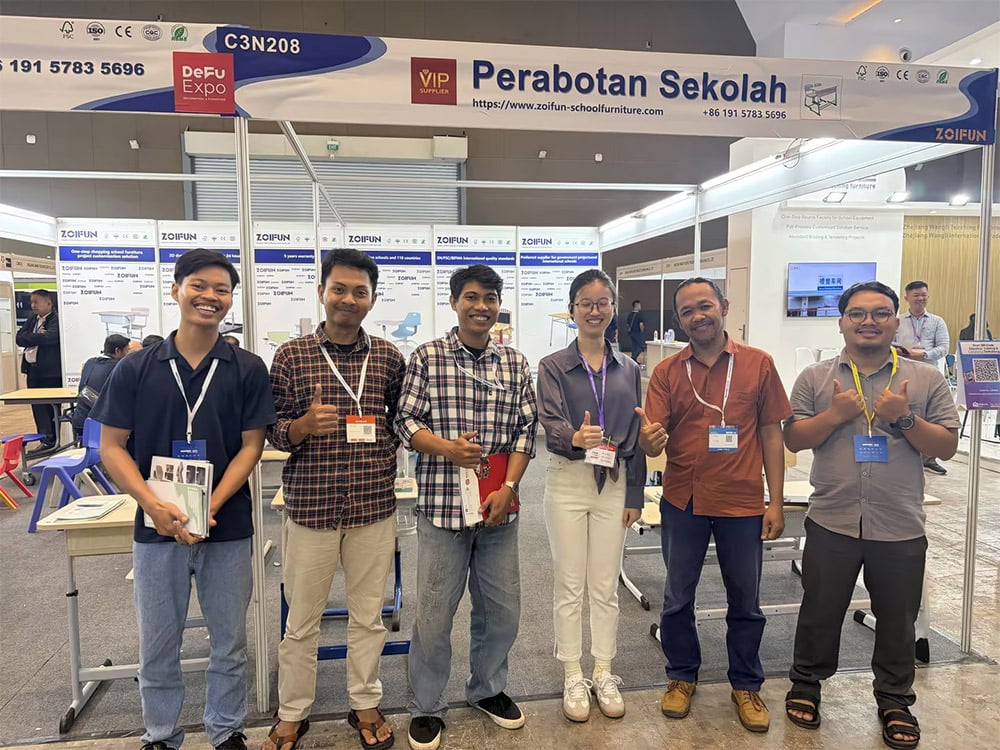
A nation prospers when its education flourishes; and education flourishes when its campuses thrive. As a vital component of the campus environment, the quality and innovative design of campus furniture directly impact the quality of student development and the overall advancement of the educational enterprise. The Indonesia DEFU Expo serves not only as a centralized showcase for industry innovations but also as a vital link fostering collaborative development across the entire campus furniture value chain, providing robust support for the upgrading of educational spaces and the healthy growth of youth. Moving forward, as smart technologies and eco-friendly philosophies continue to integrate deeply, the campus furniture industry is poised to unlock even broader horizons for growth, injecting a ceaseless stream of momentum into the creation of higher-quality, safer, and smarter campus environments.