EN

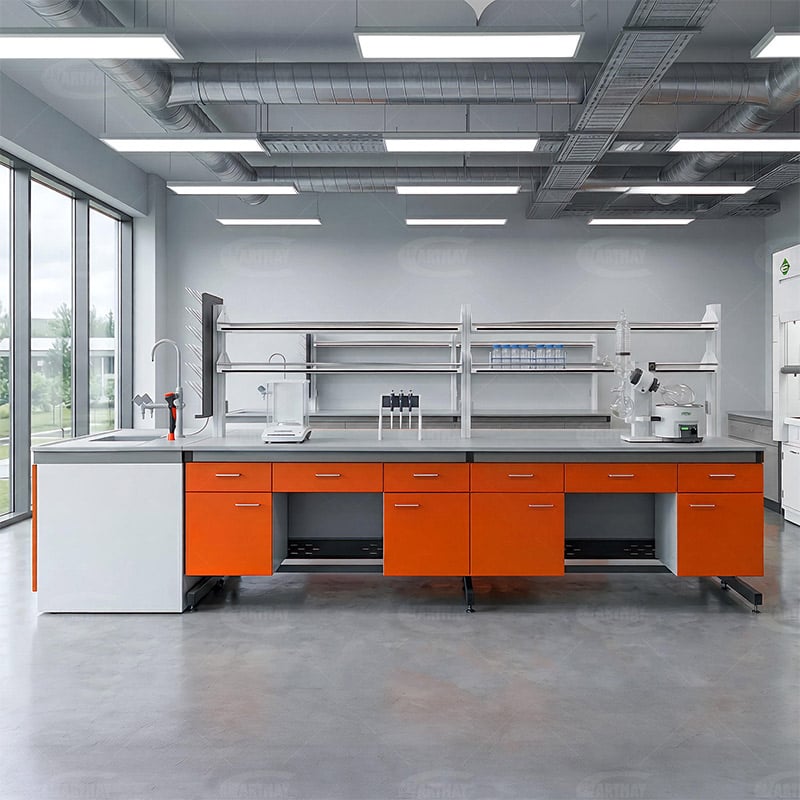
What Features Are Essential in a Lab Table?
A lab table is the working heart of any science classroom. Students lean on a lab table, heat beakers on a lab table, and spill chemicals on a lab table. Because so much depends on it, a lab table must meet standards that ordinary desks never face. A lab table has to resist chemicals, carry heavy equipment, and stay stable during experiments. Schools that choose a lab table wisely avoid years of repair bills. A poorly chosen lab table becomes a safety hazard and a budget problem. This guide explains which features are essential in a lab table. Each point reflects how a lab table is actually used in teaching labs. Understanding these features helps any buyer judge a lab table with confidence. A lab table should serve daily lessons. Every lab table needs careful planning. A lab table shapes the science room. Good design makes a lab table last. A lab table needs sturdy build.
The first essential feature is a chemical-resistant surface. A lab table must survive acids, bases, solvents, and stains. A lab table with a phenolic resin top resists most common reagents. A lab table with epoxy resin handles stronger acids and heat. A lab table with a laminate top suits lighter school experiments. The surface of a lab table should be non-porous so spills cannot sink in. A lab table with a sealed edge prevents liquid from entering the core. A lab table that stains permanently will soon look worn out. A lab table with a matte finish hides scratches better than a glossy one. A lab table surface should also resist heat from burners. A lab table without chemical resistance is not really a lab table. A lab table must resist common acids. A lab table top should seal its edges. A lab table should handle solvent spills. A lab table needs a non-porous finish. A lab table must resist stains.
The second essential feature is structural strength. A lab table must carry microscopes, centrifuges, glassware, and crowded student work. A lab table with a steel frame holds heavy loads without flexing. A lab table with cross bracing resists sideways movement. A lab table with adjustable feet stays level on uneven floors. A lab table that wobbles ruins delicate measurements. A lab table with a thick top resists sagging in the middle. A lab table should support at least the weight of a full class of equipment. A lab table with welded joints lasts longer than one with screws alone. A lab table that flexes under load will crack its surface over time. Stability is the foundation of a safe lab table. A lab table must stay level under load. A lab table frame should resist twisting. A lab table needs strong joints. A lab table should not flex during work. A lab table should stand firm.
The third essential feature is correct size and ergonomics. A lab table must fit students of different heights without forcing them to stoop. A lab table at the wrong height causes fatigue during long practicals. A lab table with adjustable height adapts to mixed age groups. A lab table should allow students to reach the centre without stretching. A lab table that is too deep wastes space and blocks access. A lab table that is too narrow crowds shared equipment. A lab table with clear legroom lets students sit comfortably. A lab table with rounded corners reduces injury during busy work. A lab table designed around student posture improves concentration. Good ergonomics make a lab table easier to use every day. A lab table should fit student height. A lab table needs generous legroom. A lab table should suit shared work. A lab table must avoid sharp corners. A lab table must fit students.
The fourth essential feature is safe utility integration. A lab table often needs power, gas, and water nearby. A lab table with integrated sockets keeps cables off the floor. A lab table with a sealed gas valve reduces leak risk. A lab table with a raised lip contains minor spills. A lab table with cable management avoids tripping hazards. A lab table with a splash guard protects nearby students. A lab table should keep utilities away from the working edge. A lab table with labelled outlets prevents confusion during experiments. A lab table with a master switch allows quick shutdown. A well-planned lab table supports experiments without adding risk. A lab table should route cables safely. A lab table needs sealed utility points. A lab table should contain small spills. A lab table must keep outlets clear. A lab table needs safe wiring.
The fifth essential feature is fire and heat resistance. A lab table may host burners, hot plates, and heated samples. A lab table top must resist localized heat without cracking. A lab table with a heat-resistant insert protects the surface. A lab table should keep flammable materials away from ignition points. A lab table with a fire-retardant frame adds a layer of safety. A lab table near a fume hood must tolerate radiant heat. A lab table that chars easily is unsuitable for chemistry teaching. A lab table with clear heat ratings helps teachers plan experiments. A lab table should carry visible safety labelling. Heat resistance makes a lab table trustworthy in real lessons. A lab table must resist burner heat. A lab table needs heat-resistant inserts. A lab table should carry safety labels. A lab table must avoid flammable contact. A lab table should resist heat.
The sixth essential feature is easy cleaning and maintenance. A lab table is exposed to spills, dust, and residues every week. A lab table with a smooth sealed top wipes clean quickly. A lab table with removable trays simplifies spill response. A lab table with resistant coating keeps its appearance longer. A lab table that absorbs liquids becomes a contamination source. A lab table with accessible drawers helps store cleaning supplies. A lab table should allow inspection of joints and fittings. A lab table with replaceable parts avoids full replacement costs. A lab table that is easy to clean encourages proper lab habits. Maintenance-friendly design extends the life of a lab table. A lab table should wipe clean quickly. A lab table needs sealed surfaces. A lab table should allow part replacement. A lab table must resist residue build-up. A lab table must clean easily.
The seventh essential feature is modularity and future expansion. A lab table rarely stays in one configuration forever. A lab table that links with others supports group experiments. A lab table with modular storage adapts to new equipment. A lab table on castors reconfigures a room in minutes. A lab table with standard dimensions fits replacement parts easily. A lab table that cannot expand limits teaching options. A lab table designed for upgrades avoids premature replacement. A lab table with compatible accessories grows with the science curriculum. A lab table should fit both demonstration and student layouts. Flexible design makes a lab table a long-term asset. A lab table should link with others. A lab table needs modular storage. A lab table should support new equipment. A lab table must adapt to layouts. A lab table should grow with needs.
The eighth essential feature is material quality and compliance. A lab table must meet safety and environmental standards. A lab table with certified materials reassures school administrators. A lab table with low-emission boards supports indoor air quality. A lab table with powder-coated steel resists rust in humid labs. A lab table built to recognized standards passes inspection more easily. A lab table with documented test reports simplifies procurement. A lab table without certification creates liability risks. A lab table should carry clear warranty terms. A lab table that meets school safety codes protects everyone. Compliance is not optional for a lab table in an educational setting. A lab table must meet safety codes. A lab table needs certified materials. A lab table should carry test reports. A lab table must document its warranty.
In conclusion, an essential lab table combines chemical resistance, structural strength, correct ergonomics, safe utilities, heat resistance, easy cleaning, modularity, and certified materials. A lab table that meets these standards supports better teaching and safer experiments. A lab table that ignores them creates daily problems. Buyers should evaluate a lab table against actual classroom use rather than catalogue photos. A lab table deserves careful specification because it serves students for years. Choose a lab table that balances durability, safety, and cost. A well-specified lab table will repay its price many times over. Every science room deserves a lab table built to these standards. A lab table should repay its cost. A lab table must fit real classrooms. A lab table deserves careful choice. A lab table will serve for years.